From Contested to Catalyst: Transforming Architectural Learning
DOI:
https://doi.org/10.12795/astragalo.2025.i39.01Abstract
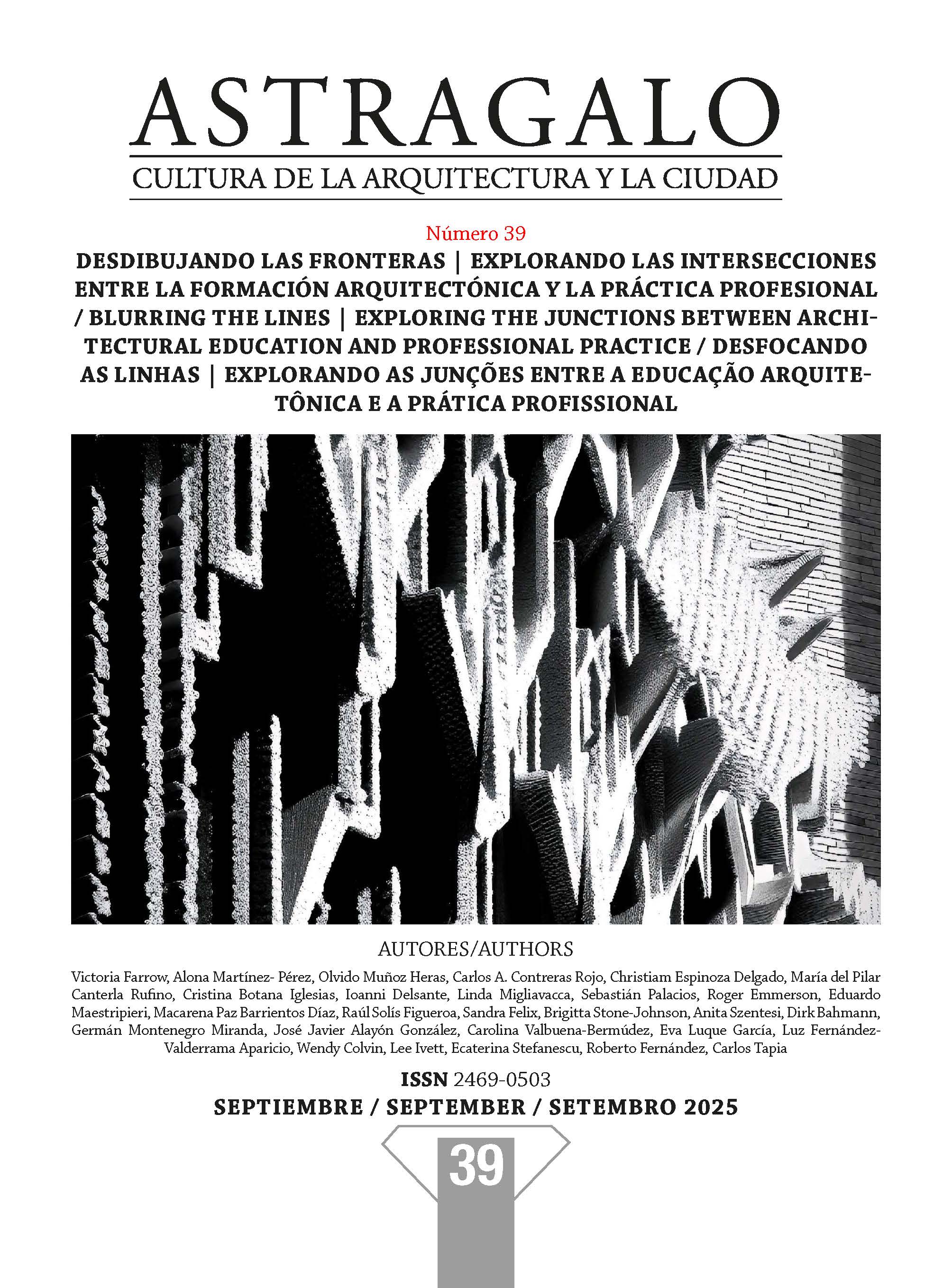
Architectural education is undergoing significant change. In the UK, the ARB and RIBA are replacing the traditional three‑stage system with a more flexible, competency‑based model, offering varied routes, early professional exposure and the use of artificial intelligence to shorten qualification time. This reform takes place amid financial precarity, rigid structures and a disconnect between teaching and research, as many tutors are practitioners rather than active scholars. Meanwhile, professional practice grapples with economic uncertainty, adoption of new technologies, pressure to deliver affordable housing and fee compression. The issue “BLURRING THE LINES | EXPLORING THE JUNCTIONS BETWEEN ARCHITECTURAL EDUCATION AND PROFESSIONAL PRACTICEs” challenges the expectation that graduates emerge “fully ready” and calls for decolonising pedagogies, integrating sustainability, diversity, ethics and multidisciplinary collaboration. It urges a stronger connection between academia and practice through longitudinal research, digital skills, mental health awareness and business management. The closing question, “What will happen in the future?”, invites reflection on the role of education in addressing the profession’s challenges.
Downloads
Downloads
Published
How to Cite
Issue
Section
License
Copyright (c) 2025 Victoria Farrow, Alona Martínez Pérez

This work is licensed under a Creative Commons Attribution-NonCommercial-ShareAlike 4.0 International License.